Technical data
01| Pressure rating | PN10 |
|---|---|
| Standard | DIN, ANSI, JIS |
| Connection type | Level |
| End connection standard | Special flanged connection |
The standards listed apply to stocked products. Contact us for other standards.
Material
02| Material |
|---|
Features
03Operation
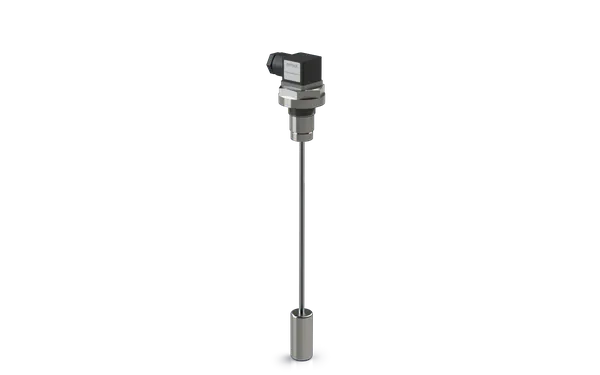
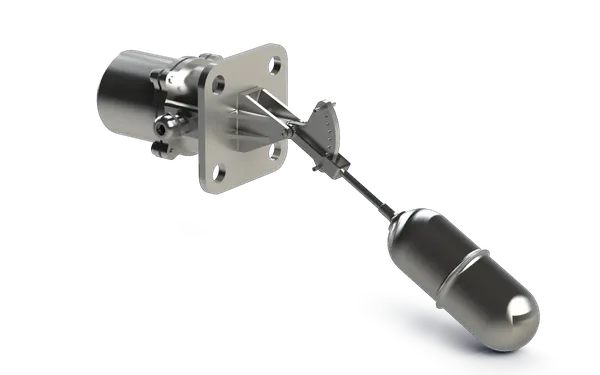
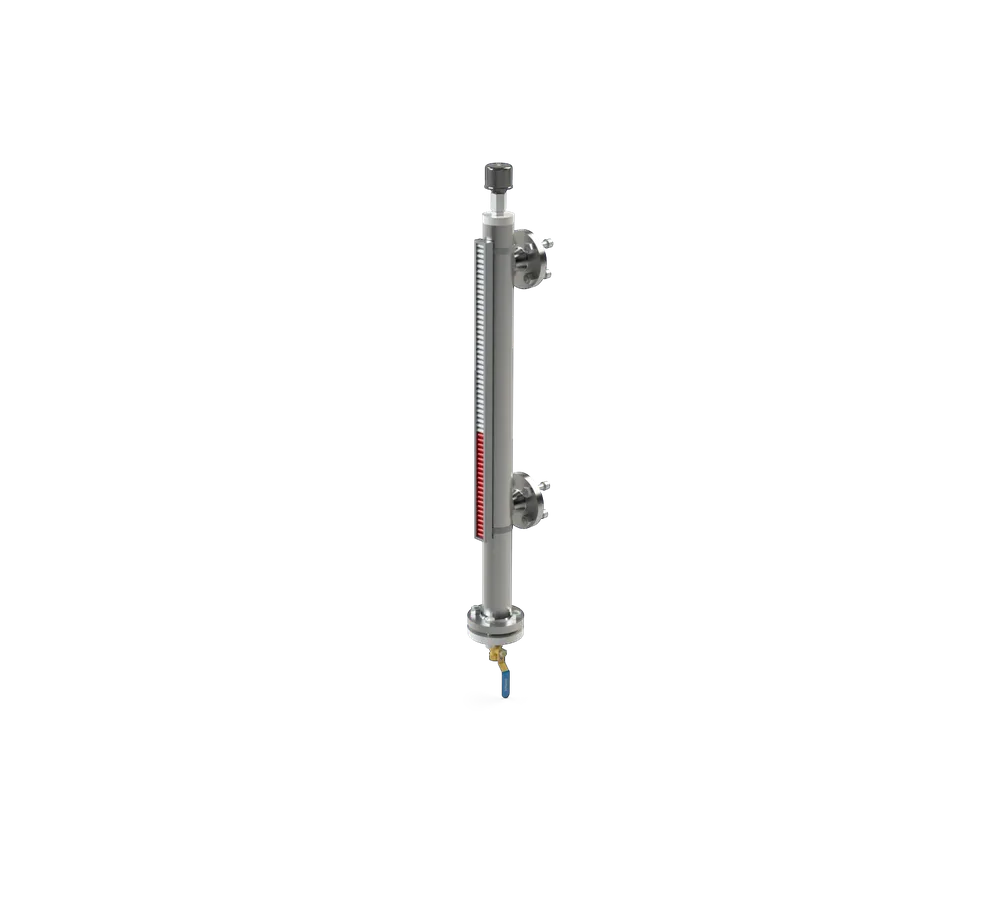
- A float inside the chamber moves up and down with the liquid level.
- Strong magnets in the float actuate the indicator elements on the outside of the tube.
- The indicator usually consists of transparent or coloured flaps (flippers); as the magnetic float passes, they turn and the colour change shows the level.
- Some models can be fitted with level switches and an analogue-output transmitter.
Advantages
- Contact-free indication: the float works inside the chamber while the indicator is outside, keeping the process sealed.
- High durability: materials resistant to pressure and corrosion (e.g. stainless steel, PP, PVDF).
- Long service life: the mechanical design works for years with little attention.
- Easy to read: the level is clearly visible even from a distance.
Applications
- Chemical industry: level of acid, alkali and solvent tanks
- Power plants: boiler and condensate tank monitoring
- Food & beverage: control in liquid production lines
- Water treatment: storage and reactor tank monitoring
- Petrochemicals: oil and fuel tank level monitoring
Considerations
- The float material must suit the density and chemistry of the liquid.
- As it works magnetically, nearby electromagnetic equipment can affect its accuracy.
- On tall tanks visual reading can be difficult; models with an output are recommended there.
Downloads
04DatasheetPDF · TR · dimension and weight table
IN PREPARATION
IN PREPARATION
CAD modelSTEP · DXF · by nominal size
IN PREPARATION
IN PREPARATION
3.1 certificate samplePDF · EN 10204 · TR/EN
Open sample
Open sample