
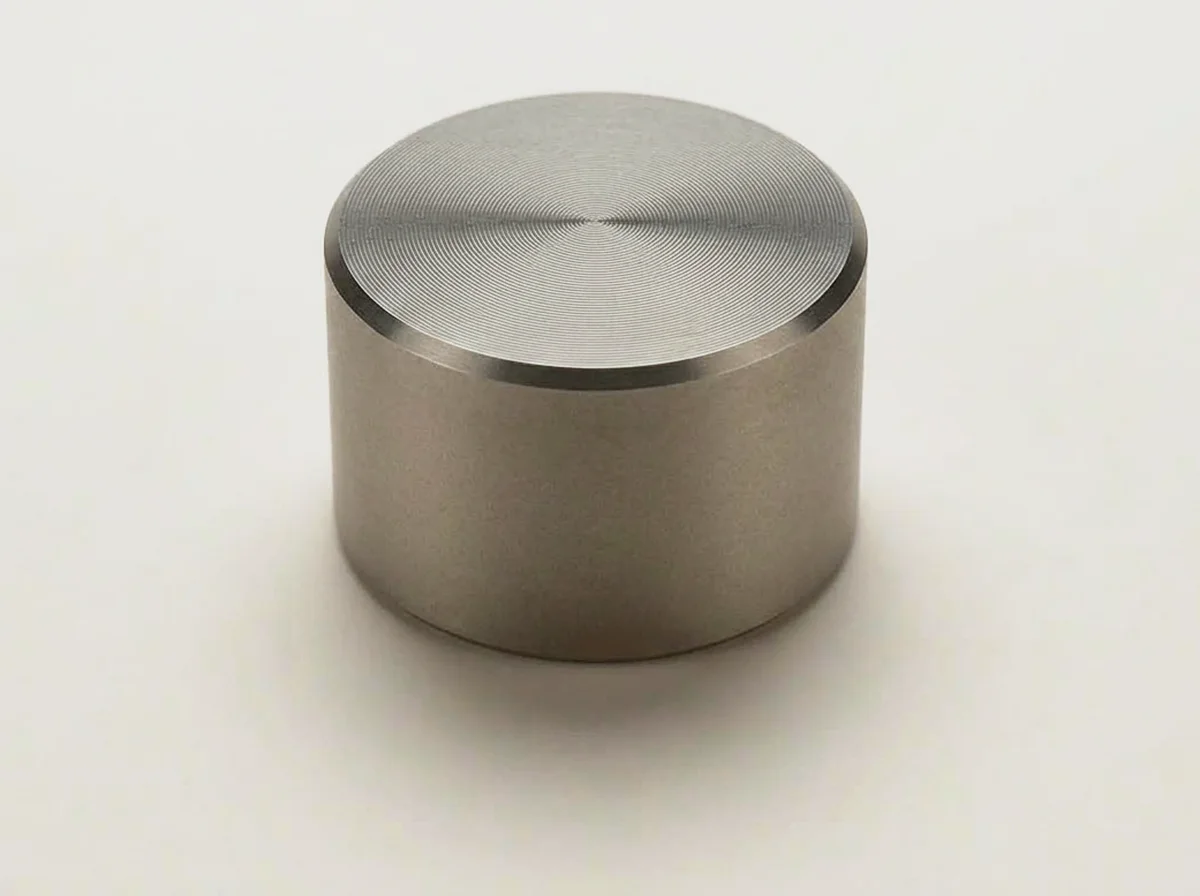
Commercially pure titanium, Grade 2
Commercially pure titanium. Practically immune to corrosion in seawater, chlorinated water and oxidizing chloride environments; half the weight of stainless steel. The titanium body/disc option of the Emsal wafer check valve.
- Rp0.2 · MPa
- ≥ 275
- Rm · MPa
- ≥ 345
- TEMPERATURE
- −60 … +316 °C
- COST
Chemical composition
%, maximum. Ti balance; other elements each ≤ 0.10, total ≤ 0.40.
Mechanical properties
| STANDARD · CONDITION | Rp0.2 MPa | Rp1.0 MPa | Rm MPa | A % | KV J |
|---|---|---|---|---|---|
| ASTM B348 / B265 · Grade 2 | 275 | — | ≥ 345 | 20 | — |
Room temperature, annealed. Reduction of area in bar Z ≥ 30%.
Service temperature
For pressure-retaining bodies, ASME VIII allowable stresses go up to 316 °C (600 °F); continuous service up to 427 °C. Not covered by ASME B16.34.
This is the limit of the material itself. A valve's service temperature is usually set by the seal and seat materials; product pages give it for each seal option.
Physical properties and heat treatment
- DENSITY
- 4.51 g/cm³
Media suitability GENERAL TREND
Emsal assessment. The final choice is made from corrosion tables, taking concentration, temperature, chloride content and flow velocity into account.
Strengths and weaknesses
Strengths
- Practically corrosion-free in seawater, resistant to cavitation
- Density 4.5 g/cm³: about half that of stainless steel
- Superior in chlorinated and oxidizing media
Weaknesses
- Weak in reducing acids (HCl, H₂SO₄) and dry chlorine
- Tendency to gall
- Expensive; inert gas shielding is essential in welding
Manufacturing and use
- ECONOMY
- High.
- MANUFACTURING METHODS
- Machining from plate and bar · Casting (C-2)
- TYPICAL VALVE PARTS
- Body · Disc · Stem (seawater)
Used in 2 Emsal products
- 001Wafer check valveBody · Disc
- 005Short pattern swing check valveDisc
Source: ASTM B265 / B348. Values compiled and verified by Emsal Vana; for binding values, refer to the current edition of the standard and the material certificate.